One of the quietest consequences of chronic stress is this:
Eventually, people stop recognizing tension as tension.
The body adapts.
What once felt overwhelming slowly becomes familiar, and over time, hypervigilance can begin to feel normal. Tight shoulders feel normal. Shallow breathing feels normal. Mental overactivity feels normal. Emotional bracing feels normal.
People adjust to survival states remarkably well.
Sometimes too well.
Many people no longer remember what genuine relaxation actually feels like in their body.
Not distraction.
Not sedation.
Not collapsing from exhaustion.
Actual relaxation.
The kind where the nervous system stops preparing.
Where the jaw softens naturally.
Where breathing deepens without effort.
Where the body no longer feels like it has to hold itself together.
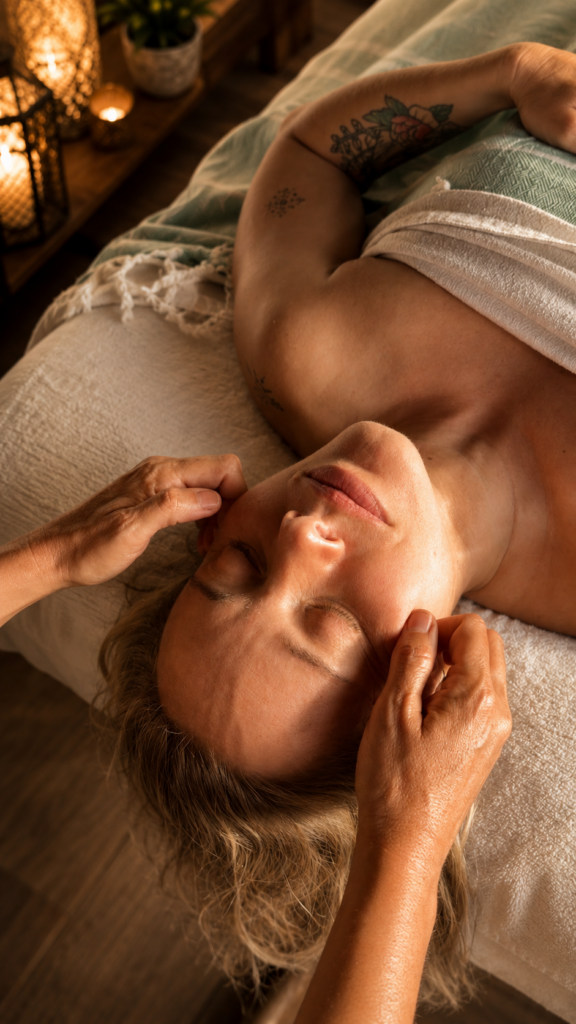
This is part of why deeply attentive bodywork can feel surprisingly emotional for some people. The experience itself may be calm, but the nervous system is encountering something unfamiliar:
Enough safety to finally let go.
The body notices that immediately.
People often assume relaxation comes automatically from slowing down, but that is not always true. Many people struggle to relax precisely because their nervous system has spent years practicing the opposite.
The body becomes conditioned toward anticipation.
Toward readiness.
Toward over-monitoring.
Toward staying partially activated at all times.
And eventually, stillness itself can begin to feel uncomfortable.
This is why true restorative work is not about forcing the body to relax. It is about creating the conditions where relaxation becomes possible again.
That process requires attentiveness.
Not just physical technique, but pacing, emotional steadiness, responsiveness, and environments that feel coherent to the nervous system.
The body relaxes differently when it feels genuinely supported.
And often, people do not realize how long they have been carrying tension until they experience a moment without it.
That contrast can feel profound.
Not because something dramatic happened, but because the nervous system finally experienced an alternative to constant vigilance.
In many ways, modern life conditions people away from relaxation. Constant stimulation, speed, inconsistency, emotional overload, and digital saturation keep the body subtly activated almost all the time.
So when someone encounters true attentiveness, calm pacing, and genuine care, the body responds strongly.
Not because relaxation is extraordinary.
Because it has become rare enough to feel unfamiliar.