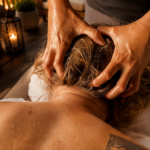
There’s a difference between receiving a massage and receiving deeply attentive bodywork.

Most people have received massage. Very few people have experienced deeply attentive bodywork. There is a difference. A massage can be technically correct and still feel emotionally disconnected. The practitioner may know anatomy, pressure, sequence, and technique, but the experience itself can still feel routine. Predictable. Transactional. The body notices when touch is being performed instead of felt. Deeply attentive bodywork is different because the practitioner is not simply applying a method to the body. They are responding to the body in real time. The pacing changes.The pressure changes.The rhythm changes.The session adapts moment by moment based on what the body is communicating. This creates an entirely different nervous system experience. In routine massage, the practitioner often leads the session. In attentive bodywork, the body leads the session. That distinction changes everything. Many people do not realize how accustomed they have become to rushed wellness experiences. Timed transitions. Repetitive routines. Practitioners working from memorized structure rather than actual observation. But the nervous system responds very differently when it feels genuinely listened to. The body softens faster. Breathing changes naturally.Guarding decreases.The nervous system stops preparing as intensely. Not because the pressure is deeper. Because attentiveness itself is regulating. Deeply attentive bodywork is not about doing the most. In many cases, it involves slowing down enough to actually perceive what the body is doing instead of forcing an outcome onto it. This requires presence. Not performative presence, but real attentiveness. The ability to notice subtle shifts in breath, muscle guarding, emotional holding, pacing tolerance, and nervous system responsiveness without rushing to override them. That level of listening has become increasingly rare. Modern life conditions people toward speed, productivity, and overstimulation. Many wellness experiences unintentionally mirror that same energy. Even relaxation becomes optimized, scheduled, and rushed. But the body does not unwind through pressure alone. It unwinds through safety. This is why some sessions stay with people long afterward. The body remembers the experience of being met differently. Not handled mechanically, but attended to carefully. And often, that experience affects people more deeply than they expected. Not because something mystical happened. Because for a moment, the body no longer felt managed. It felt listened to.
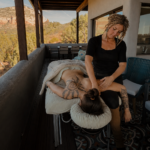
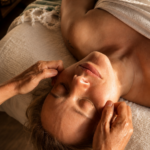
There’s a difference between receiving a massage and receiving deeply attentive bodywork. Read More »

Luxury is coordination, not decoration.

A perspective on nervous system-centered hospitality, emotional safety, and why true luxury is felt through attentiveness, coordination, and care. Luxury has been misunderstood for a long time. Most brands treat luxury as decoration. Beautiful robes.Expensive finishes.Minimalist interiors.Candles.Aesthetic branding. But the nervous system does not actually relax because something looks expensive. The nervous system relaxes when it no longer has to monitor. Real luxury is coordination. It is arriving somewhere and immediately feeling that someone thought everything through. It is not needing to ask where to go, what to do next, or whether you are being taken care of. The body notices disorganization immediately. Late arrivals.Confusing communication.Chaotic pacing.Transactional energy.Unclear expectations. Even small moments of friction keep the nervous system alert. That is why true hospitality feels so rare now. Most experiences prioritize appearance over attentiveness. Businesses focus heavily on visual aesthetics while completely overlooking emotional safety, pacing, responsiveness, and care. But people remember how an experience made their body feel. Luxury wellness is not about excess. It is about removing friction. It is seamless communication before the session begins.It is calm pacing.It is consistency.It is emotional awareness.It is feeling handled instead of managed. The highest-end experiences in the world all understand this intuitively. The details themselves are often simple. What feels luxurious is the absence of stress. No confusion.No chasing people down.No emotional labor required from the client. Just ease. This becomes even more important in wellness spaces because relaxation cannot be forced. The nervous system is constantly assessing whether an environment feels safe, coherent, and attentive. That process begins long before touch ever happens. The experience starts with the inquiry.The communication.The arrival.The pacing.The tone of the room.The emotional presence of the practitioner. Luxury is not candles and robes. Luxury is never having to wonder if you are being taken care of. And increasingly, that level of attentiveness has become one of the rarest experiences people can receive.

Luxury is coordination, not decoration. Read More »

Some people have completely forgotten what relaxation feels like.

One of the quietest consequences of chronic stress is this: Eventually, people stop recognizing tension as tension. The body adapts. What once felt overwhelming slowly becomes familiar, and over time, hypervigilance can begin to feel normal. Tight shoulders feel normal. Shallow breathing feels normal. Mental overactivity feels normal. Emotional bracing feels normal. People adjust to survival states remarkably well. Sometimes too well. Many people no longer remember what genuine relaxation actually feels like in their body. Not distraction.Not sedation.Not collapsing from exhaustion. Actual relaxation. The kind where the nervous system stops preparing.Where the jaw softens naturally.Where breathing deepens without effort.Where the body no longer feels like it has to hold itself together. This is part of why deeply attentive bodywork can feel surprisingly emotional for some people. The experience itself may be calm, but the nervous system is encountering something unfamiliar: Enough safety to finally let go. The body notices that immediately. People often assume relaxation comes automatically from slowing down, but that is not always true. Many people struggle to relax precisely because their nervous system has spent years practicing the opposite. The body becomes conditioned toward anticipation. Toward readiness.Toward over-monitoring.Toward staying partially activated at all times. And eventually, stillness itself can begin to feel uncomfortable. This is why true restorative work is not about forcing the body to relax. It is about creating the conditions where relaxation becomes possible again. That process requires attentiveness. Not just physical technique, but pacing, emotional steadiness, responsiveness, and environments that feel coherent to the nervous system. The body relaxes differently when it feels genuinely supported. And often, people do not realize how long they have been carrying tension until they experience a moment without it. That contrast can feel profound. Not because something dramatic happened, but because the nervous system finally experienced an alternative to constant vigilance. In many ways, modern life conditions people away from relaxation. Constant stimulation, speed, inconsistency, emotional overload, and digital saturation keep the body subtly activated almost all the time. So when someone encounters true attentiveness, calm pacing, and genuine care, the body responds strongly. Not because relaxation is extraordinary. Because it has become rare enough to feel unfamiliar.

Some people have completely forgotten what relaxation feels like. Read More »

Deep restoration requires more than rest.

Many people are technically resting. But very few people are truly restoring. There is a difference. Someone can sleep eight hours, spend a weekend at home, take a vacation, or book a massage and still feel deeply fatigued afterward. Not because rest “did not work,” but because the nervous system never fully stopped monitoring. Real restoration requires more than inactivity. It requires enough safety for the body to stop bracing. Many people live in a near-constant state of subtle vigilance. Their body is continuously adapting, anticipating, managing, responding, tracking, and holding tension against the unpredictability of life. Over time, that state becomes familiar. The body forgets what ease feels like. This is part of why people can feel exhausted even after slowing down. Their environment may be quiet, but internally, the nervous system is still working. Still scanning.Still anticipating.Still preparing. Deep restoration begins when the body no longer feels responsible for holding everything together. That is why attentiveness matters so much in restorative experiences. The nervous system responds less to the concept of “self-care” and more to the actual experience of being supported. Being considered.Being handled gently.Being in an environment where nothing feels chaotic, rushed, inconsistent, or emotionally demanding. The body relaxes in coherent environments. And increasingly, coherence has become rare. Many people move through experiences filled with subtle friction: constant notifications, emotional overstimulation, disorganized communication, rushed schedules, background stress, and environments that require continuous adaptation. Even luxury spaces often overlook this. Aesthetic environments alone do not create restoration. A beautiful room cannot override emotional tension, poor pacing, inattentiveness, or nervous system overload. True restoration is relational. It is the feeling that, for a moment, nothing is required from you. No performing.No monitoring.No fixing.No preparing for the next thing. Just enough steadiness for the body to finally soften. This is why deeply restorative experiences often affect people emotionally. The body is not only releasing physical tension. It is responding to the unfamiliar experience of no longer needing to stay guarded. And for many people, that feeling is far rarer than they realize.

Deep restoration requires more than rest. Read More »

Why poor hospitality is physically exhausting.

An exploration of emotional friction, hypervigilance, and why disorganization and inconsistency can feel physically exhausting to the body. Most people think exhaustion only comes from overworking. But many people are actually exhausted from constantly adapting to disorganization. Poor hospitality creates emotional labor. And emotional labor is physical. The nervous system is continuously scanning environments for coherence, predictability, attentiveness, and safety. When those things are missing, the body compensates by becoming more alert. That alertness costs energy. People often describe certain experiences as “draining” without fully understanding why. Usually, it is not one major issue. It is accumulated friction. Unclear communication.Last-minute changes.Inconsistent pacing.Feeling forgotten.Having to ask multiple times.Feeling emotionally unmanaged inside an experience that was supposed to feel supportive. The body interprets inconsistency as instability. Even in subtle ways. This is why poor hospitality can feel physically exhausting long after the interaction ends. The nervous system never fully exits monitoring mode. Instead of settling, the body stays partially braced the entire experience. Many luxury industries misunderstand this completely. They focus heavily on visual aesthetics while neglecting emotional coherence. But beautiful branding does not regulate the nervous system. Attentiveness does. Consistency does. Clear communication does. Feeling anticipated instead of managed does. True hospitality reduces the amount of energy someone has to spend navigating an experience. That reduction matters more than people realize. When someone feels genuinely taken care of, the body reallocates energy differently. Breathing changes. Muscles soften. Attention widens. The nervous system stops preparing for friction. This is part of why deeply restorative experiences can feel emotional for people. Not because something dramatic happened. But because their body finally stopped compensating. For many people, hypervigilance has become so normalized that true ease feels unfamiliar. They are used to carrying the invisible labor of anticipating problems, managing uncertainty, and adapting to environments that are not fully attentive. Then they encounter an experience where they do not have to. And the body notices immediately. Luxury is often misunderstood as excess. But real luxury is the removal of unnecessary stress. It is the feeling of not having to hold everything together yourself for a moment. And increasingly, that feeling has become rare enough to feel profoundly restorative.

Why poor hospitality is physically exhausting. Read More »

Why some practitioners change people in just one session.

Exploring practitioner presence, nervous system regulation, and the relational intelligence behind deeply impactful bodywork experiences. There are sessions people enjoy.And then there are sessions people remember for years. Most people assume the difference is technique. But often, it is not technique alone that changes someone. It is capacity. Some practitioners know many techniques but have very little ability to actually listen to the body in real time. The session becomes mechanical. Predictable. Performed. The practitioner follows a sequence instead of following the person in front of them. The body notices the difference immediately. Deeply impactful bodywork is rarely about doing more.It is usually about perceiving more. The nervous system responds to attentiveness before it responds to pressure. Before the body lets go physically, it often has to stop monitoring emotionally. That is why some sessions feel pleasant while others feel strangely emotional, restorative, or deeply settling long after they are over. The practitioner’s pacing matters.Their regulation matters.Their ability to notice subtle changes matters. A skilled practitioner is not simply applying pressure to tissue. They are observing breathing patterns, guarding patterns, micro-reactions, temperature changes, emotional holding, energetic shifts, and moments where the body begins to reorganize itself. This is why two practitioners can technically perform the same modality while creating completely different experiences. One session feels transactional. The other feels like the body was finally met properly. Many people have experienced technique. Very few people have experienced deeply attentive bodywork. In high-quality bodywork, the practitioner is not trying to dominate the body into change. They are creating enough safety, responsiveness, and attentiveness for the body to begin changing on its own. That distinction matters. The most transformative sessions are rarely rushed. They are relational. Observational. Responsive. The practitioner is adjusting constantly based on what the body is communicating rather than forcing the body through a predetermined routine. This is also why presence cannot be faked. Clients may not consciously understand why one experience feels different from another, but the nervous system understands immediately. The body can feel when someone is truly paying attention. And in a world increasingly shaped by distraction, automation, speed, and performance, sustained attentiveness has become rare enough to feel transformational. Not because it is magic. Because being deeply attended to changes people.

Why some practitioners change people in just one session. Read More »

Most people have experienced technique. Very few have experienced truly attentive bodywork.

There is a difference between receiving a massage and receiving deeply attentive bodywork. Most people have experienced technique. Pressure.Movement.A sequence.A routine. But very few people have experienced touch that is truly responsive. The body notices the difference immediately. Not because the nervous system is analyzing technique, but because it is constantly assessing presence, pace, safety, and attentiveness. Many wellness experiences are built around performance. The therapist performs relaxation.The environment performs luxury.The experience performs care. But the body responds to what is real. It responds to whether someone is actually listening. Deeply attentive bodywork is not rigid. It is relational. It changes in real time. The pace changes.The pressure changes.The stillness changes. The practitioner is not forcing a routine onto the body. They are paying attention to what the body is already communicating. Sometimes what creates the deepest shift is not more pressure. Sometimes it is finally feeling like the body no longer has to brace against being overlooked. Many people have normalized rushed touch. Transactional touch.Overstimulated environments.Practitioners moving too quickly.Spaces that feel beautiful but emotionally inattentive. And because it is common, people often assume that is simply what bodywork is supposed to feel like. But when someone experiences true attentiveness for the first time, the body often responds before the mind can explain why. Breathing changes.Guarding softens.Time slows down. The nervous system begins reallocating energy away from monitoring and toward restoration. This is part of why some sessions stay with people long after they end. Not because of memorized techniques, but because the body remembers experiences where it no longer had to remain vigilant. Deep restoration rarely comes from intensity alone. It comes from responsiveness. From emotional steadiness.From pacing.From precision.From feeling genuinely taken care of. Many people do not need more stimulation. They need environments, experiences, and practitioners capable of creating enough safety for the body to finally stop anticipating interruption. That is a very different kind of work.

Most people have experienced technique. Very few have experienced truly attentive bodywork. Read More »

The body relaxes when it no longer has to monitor.

Most people think relaxation comes from comfort. But often, relaxation begins with certainty. The nervous system is constantly evaluating environments. Not intellectually.Physically. It notices disorganization.Inconsistency.Rushed energy.Unclear communication.Emotional unpredictability. The body responds to these things long before the mind forms language around them. This is why poor hospitality feels exhausting. Not because of inconvenience alone, but because the nervous system never fully exits its monitoring state. Many people have become so accustomed to low-grade vigilance that they no longer recognize it as tension. It simply feels normal. Double-checking details.Managing uncertainty.Preparing for disappointment.Anticipating interruption. Even during experiences meant to feel restorative. Luxury, at its highest level, is not decoration. It is relief. Relief from having to manage the experience yourself. Relief from emotional friction.Relief from uncertainty.Relief from hypervigilance. The nervous system notices when care has been thoughtfully anticipated. It notices pace.Preparation.Attentiveness.Consistency. This is part of why deeply restorative environments often feel emotionally significant. The body is responding to more than aesthetics. It is responding to the rare experience of no longer needing to stay alert. And when that happens, restoration becomes possible in a completely different way.

The body relaxes when it no longer has to monitor. Read More »

The Experience starts long before the massage.

From communication to pacing and emotional safety, this journal explores why the nervous system responds to experiences long before the bodywork begins. Most people think the experience begins when the massage starts. It does not. The nervous system begins responding much earlier than that. It responds to the first message.The tone of communication.The pacing of the conversation.The clarity of the process.Whether the experience feels thoughtful or chaotic. Long before touch ever happens, the body is already deciding whether it can relax. This is why two wellness experiences with similar services can feel completely different. One feels calming before you even arrive. The other feels subtly stressful the entire time. Many wellness brands focus heavily on aesthetics while overlooking the actual experience of being cared for. Beautiful visuals cannot compensate for disorganization, inconsistency, rushed pacing, or emotional inattentiveness. The body notices friction immediately. Delayed responses.Confusing directions.Feeling uncertain about timing.Not knowing what to expect.Feeling emotionally “handled” instead of genuinely supported. Even small moments of uncertainty keep the nervous system engaged in monitoring. And people often underestimate how exhausting that monitoring actually is. Deep rest requires safety.Not just physical safety, but relational safety. The nervous system is constantly asking: Am I being taken care of?Can I stop paying attention now?Can I let go here? This is part of why highly restorative experiences often feel different before the session even begins. There is usually a sense of steadiness surrounding them. The pacing feels intentional. Communication feels grounded. The environment feels coherent. Nothing feels rushed. In deeply attentive wellness experiences, the practitioner understands that regulation is contagious. The client is not only responding to the massage itself. They are responding to the emotional atmosphere surrounding the entire interaction. People do not separate hospitality from healing as much as the wellness industry thinks they do. The experience of being cared for changes how the body receives care. This is why true restoration is rarely created through technique alone. It is created through attentiveness. Through pacing.Through consistency.Through emotional steadiness.Through environments that allow the nervous system to stop bracing. Because often, the body begins relaxing long before the first touch ever happens.

The Experience starts long before the massage. Read More »